SECTION I
the lore
the living record
the living record
the living record
the living record
the living record
the living record
The Book of Pause · eight chapters
Dive deeper into the philosophy behind your in-app collection archive: The Living Record.
Dive deeper into the philosophy behind your in-app collection archive: The Living Record.
Dive deeper into the philosophy behind your in-app collection archive: The Living Record.
CONTENTS
eight chapters
contents
contents
contents
I
origin
origin
origin
where are we?
where are we?
II
law
law
law
the part / the whole
the part / the whole
III
knowledge
knowledge
knowledge
arrivals and departures
arrivals and departures
IV
listening
listening
listening
the beetle and the magnolia
the beetle and the magnolia
V
relationship
relationship
relationship
reciprocity
reciprocity
VI
time
time
time
gathering
gathering
VII
senses
senses
senses
the ritual of the game
the ritual of the game
VIII
invitation
invitation
invitation
are you ready to play?
are you ready to play?
CHAPTER I
origin

Sequoia
Redwood
origin
origin
origin
origin
origin
origin
Before there were names, there were pauses.
Before there were names, there were pauses.
Before there were names, there were pauses.
We called the first pause, the one between here and now. Born into the world, over and over again, our ancestors had to ask: where are we?
It was only in exploring their ecosystem that they began to ask when are we? Humans arrived late in this world: not as creators or owners, but as fellow dwellers. The plants that made up our home had known time in this world far longer, and understood the dance of inhabiting place through time.
As our ancestors walked through the meandering paths of their homes, they began to recognize familiar branches and blooms, landmarks to place and testaments to change. They noticed that beauty often marked an agreement between forces. And so—I like to imagine at least—our ancestors learned to ask the plants some questions.
What did the plants know of how to respond to the changing of the seasons, and how did they weather a storm, or make peace with a fire? Our ancestors waited and watched carefully for a response, with each cycle and disturbance. Slowly some noticed a pattern, a process to how plants collectivized in the aftermath.
How do neighbors and kin relate to each other, as well as to others, through conflict and through certainty? They noticed that the tree of a stump that fell after a week of storm, seemed to live on. It was assumed they were nourished by others, there could be no other answer.
Upon seeing death and life converge, they asked is aging scary, or is it sacred? Can two things be true at once? And as generations were born and passed, they noticed that succession carried lessons, and the lessons of the prior endured.
For none of these questions, could our ancestors capture the answer in a moment. As they learned about their neighbors, our ancestors began to give them names which carried a key observation they could pass on to their children. In these names, we receive the lesson once learned by a distant relative, but if we continue to listen in the pause…what new names might emerge?
In each pause—each gentle, tender, or disarming greeting—is the invitation for a following moment. Where we can speak to the descendants of the plants our ancestors spoke to, and explore how they, like us, have created many new names for themselves. What stories and songs might live beyond the names we greet each other with?
We called the first pause, the one between here and now. Born into the world, over and over again, our ancestors had to ask: where are we?
It was only in exploring their ecosystem that they began to ask when are we? Humans arrived late in this world: not as creators or owners, but as fellow dwellers. The plants that made up our home had known time in this world far longer, and understood the dance of inhabiting place through time.
As our ancestors walked through the meandering paths of their homes, they began to recognize familiar branches and blooms, landmarks to place and testaments to change. They noticed that beauty often marked an agreement between forces. And so—I like to imagine at least—our ancestors learned to ask the plants some questions.
What did the plants know of how to respond to the changing of the seasons, and how did they weather a storm, or make peace with a fire? Our ancestors waited and watched carefully for a response, with each cycle and disturbance. Slowly some noticed a pattern, a process to how plants collectivized in the aftermath.
How do neighbors and kin relate to each other, as well as to others, through conflict and through certainty? They noticed that the tree of a stump that fell after a week of storm, seemed to live on. It was assumed they were nourished by others, there could be no other answer.
Upon seeing death and life converge, they asked is aging scary, or is it sacred? Can two things be true at once? And as generations were born and passed, they noticed that succession carried lessons, and the lessons of the prior endured.
For none of these questions, could our ancestors capture the answer in a moment. As they learned about their neighbors, our ancestors began to give them names which carried a key observation they could pass on to their children. In these names, we receive the lesson once learned by a distant relative, but if we continue to listen in the pause…what new names might emerge?
In each pause—each gentle, tender, or disarming greeting—is the invitation for a following moment. Where we can speak to the descendants of the plants our ancestors spoke to, and explore how they, like us, have created many new names for themselves. What stories and songs might live beyond the names we greet each other with?
We called the first pause, the one between here and now. Born into the world, over and over again, our ancestors had to ask: where are we?
It was only in exploring their ecosystem that they began to ask when are we? Humans arrived late in this world: not as creators or owners, but as fellow dwellers. The plants that made up our home had known time in this world far longer, and understood the dance of inhabiting place through time.
As our ancestors walked through the meandering paths of their homes, they began to recognize familiar branches and blooms, landmarks to place and testaments to change. They noticed that beauty often marked an agreement between forces. And so—I like to imagine at least—our ancestors learned to ask the plants some questions.
What did the plants know of how to respond to the changing of the seasons, and how did they weather a storm, or make peace with a fire? Our ancestors waited and watched carefully for a response, with each cycle and disturbance. Slowly some noticed a pattern, a process to how plants collectivized in the aftermath.
How do neighbors and kin relate to each other, as well as to others, through conflict and through certainty? They noticed that the tree of a stump that fell after a week of storm, seemed to live on. It was assumed they were nourished by others, there could be no other answer.
Upon seeing death and life converge, they asked is aging scary, or is it sacred? Can two things be true at once? And as generations were born and passed, they noticed that succession carried lessons, and the lessons of the prior endured.
For none of these questions, could our ancestors capture the answer in a moment. As they learned about their neighbors, our ancestors began to give them names which carried a key observation they could pass on to their children. In these names, we receive the lesson once learned by a distant relative, but if we continue to listen in the pause…what new names might emerge?
In each pause—each gentle, tender, or disarming greeting—is the invitation for a following moment. Where we can speak to the descendants of the plants our ancestors spoke to, and explore how they, like us, have created many new names for themselves. What stories and songs might live beyond the names we greet each other with?
CHAPTER II
law

Artemisia
Wormwood
law
law
law
law
law
law
In this world, nothing is understood the first time it is encountered.
In this world, nothing is understood the first time it is encountered.
In this world, nothing is understood the first time it is encountered.
It is said we’re made of star stuff, and that the plants are drinking light from the sun. The soil holds the lives of many, and gives life anew. The story lives in the moments between the encounters. Between the stars—those lofty cosmos—and their entrance to this planet, through us.
Everything here shares building blocks—our matter united by material—but something unique configures to make a you or a me. Imagine all that we could wonder about the space in between? Everything is decomposing, recomposing, weathering, and forming: we give and we take, we lose and we gain. But when the sagebrush sways, or laughter breaks loose in the heat of the day, what is truly marking these passing of days?
We are all here, sharing the few building blocks it takes to make a vast universe. This sameness assembles into a deep, meandering difference, forming a shape that allows me to even say you and me. And across these differences, something like a choir emerges: rich and dynamic, but never twice the same.
It is said we’re made of star stuff, and that the plants are drinking light from the sun. The soil holds the lives of many, and gives life anew. The story lives in the moments between the encounters. Between the stars—those lofty cosmos—and their entrance to this planet, through us.
Everything here shares building blocks—our matter united by material—but something unique configures to make a you or a me. Imagine all that we could wonder about the space in between? Everything is decomposing, recomposing, weathering, and forming: we give and we take, we lose and we gain. But when the sagebrush sways, or laughter breaks loose in the heat of the day, what is truly marking these passing of days?
We are all here, sharing the few building blocks it takes to make a vast universe. This sameness assembles into a deep, meandering difference, forming a shape that allows me to even say you and me. And across these differences, something like a choir emerges: rich and dynamic, but never twice the same.
It is said we’re made of star stuff, and that the plants are drinking light from the sun. The soil holds the lives of many, and gives life anew. The story lives in the moments between the encounters. Between the stars—those lofty cosmos—and their entrance to this planet, through us.
Everything here shares building blocks—our matter united by material—but something unique configures to make a you or a me. Imagine all that we could wonder about the space in between? Everything is decomposing, recomposing, weathering, and forming: we give and we take, we lose and we gain. But when the sagebrush sways, or laughter breaks loose in the heat of the day, what is truly marking these passing of days?
We are all here, sharing the few building blocks it takes to make a vast universe. This sameness assembles into a deep, meandering difference, forming a shape that allows me to even say you and me. And across these differences, something like a choir emerges: rich and dynamic, but never twice the same.
One shall find the only rule is this: abundance seeps into the scales of our songs as they change with the relations of a place fundamentally like no other.
One shall find the only rule is this: abundance seeps into the scales of our songs as they change with the relations of a place fundamentally like no other.
One shall find the only rule is this: abundance seeps into the scales of our songs as they change with the relations of a place fundamentally like no other.
CHAPTER III
knowledge
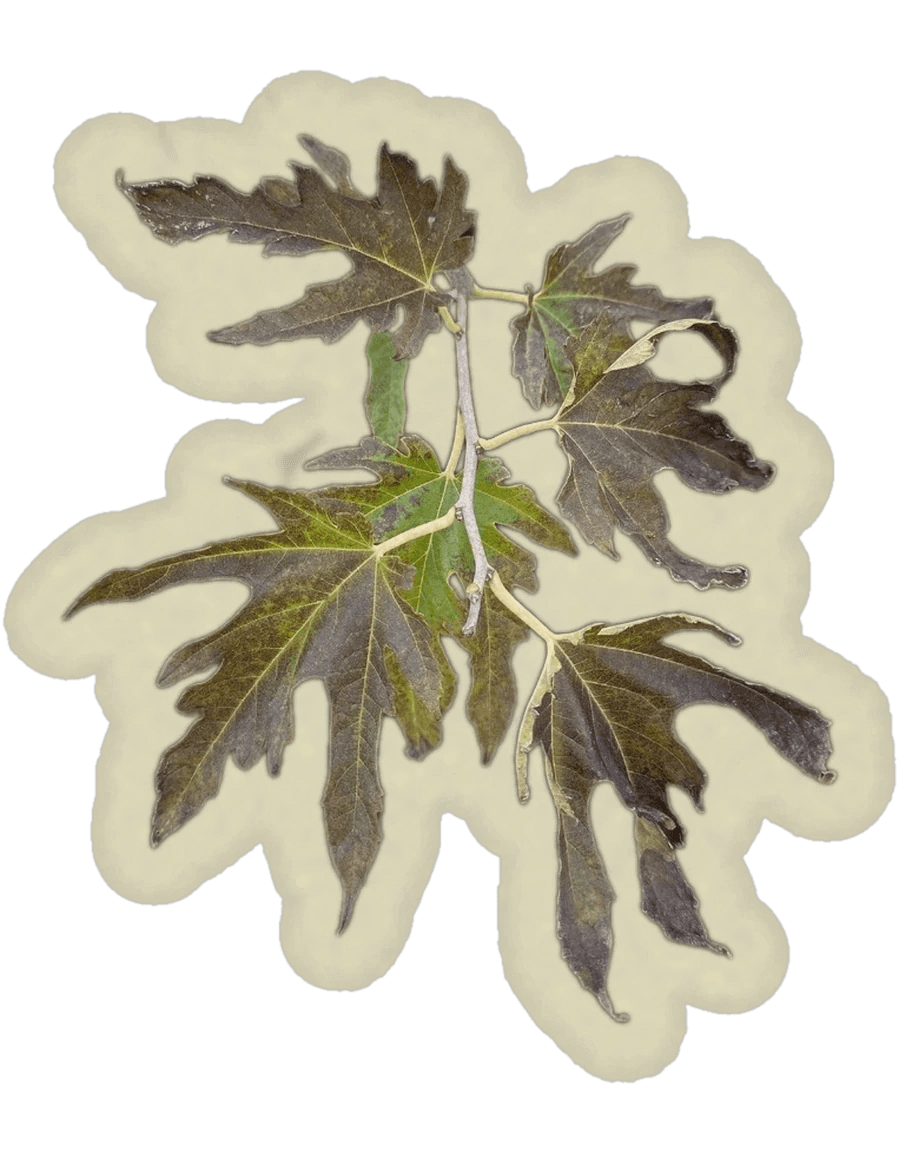
Acer
Maple
knowledge
knowledge
knowledge
knowledge
knowledge
knowledge
Begin your field journal such that each page is an arrival and a departure.
Begin your field journal such that each page is an arrival and a departure.
Begin your field journal such that each page is an arrival and a departure.
Mark a pause in each expedition, with every greeting of another. Ask questions to the plants around you, let them ask you some. Remember the ghosts of the ones who once knew that to know is to remember and to forget. Each season a new shade, a new bend towards the sun. But never will the whole structure come undone.
Cycles meander, but they remain in motion. So too will your encounters.
You will mark arrivals. You will mark departures.
And in time, these markings will begin to speak to one another.
For some, patterns will emerge through the repetition enduring under many different skies. For others, in one place, the ground itself will begin to answer.
How lovely it is to greet, each day, a fellow traveler; together we journey around and drink from the sun.
Mark a pause in each expedition, with every greeting of another. Ask questions to the plants around you, let them ask you some. Remember the ghosts of the ones who once knew that to know is to remember and to forget. Each season a new shade, a new bend towards the sun. But never will the whole structure come undone.
Cycles meander, but they remain in motion. So too will your encounters.
You will mark arrivals. You will mark departures.
And in time, these markings will begin to speak to one another.
For some, patterns will emerge through the repetition enduring under many different skies. For others, in one place, the ground itself will begin to answer.
How lovely it is to greet, each day, a fellow traveler; together we journey around and drink from the sun.
Mark a pause in each expedition, with every greeting of another. Ask questions to the plants around you, let them ask you some. Remember the ghosts of the ones who once knew that to know is to remember and to forget. Each season a new shade, a new bend towards the sun. But never will the whole structure come undone.
Cycles meander, but they remain in motion. So too will your encounters.
You will mark arrivals. You will mark departures.
And in time, these markings will begin to speak to one another.
For some, patterns will emerge through the repetition enduring under many different skies. For others, in one place, the ground itself will begin to answer.
How lovely it is to greet, each day, a fellow traveler; together we journey around and drink from the sun.
CHAPTER IV
listening

Magnolia
listening
listening
listening
listening
listening
listening
The world we live in does not explain itself: it unfolds slowly to those who linger.
The world we live in does not explain itself: it unfolds slowly to those who linger.
The world we live in does not explain itself: it unfolds slowly to those who linger.
Yet each of us makes up this world, and so in noticing the parts, we can remember the whole.
There was once a beetle who landed atop a magnolia bud, furry and soft, a comfort within Spring’s violent winds. When the beetle returned the day one more after, the bud had bloomed into a deep cup to shelter from the winds that blew chills. In this cup, the beetle found, a fruity nectar to drink from. Each spring following, that soft, furry bud marked a seat of anticipation, for the days to come.
Like the beetle, so too did humans learn to listen, smell, and search for the signals that move ahead of what is visible. Each day, likely, you carry your field lens in tow—let it accompany your witnessing, so in the pause you may forget. And when the day one more after comes, a new encounter will be enriched with that you remember. Your Living Record, an ode to home: a place always here, but seen through the pauses of a present everchanging.
Yet each of us makes up this world, and so in noticing the parts, we can remember the whole.
There was once a beetle who landed atop a magnolia bud, furry and soft, a comfort within Spring’s violent winds. When the beetle returned the day one more after, the bud had bloomed into a deep cup to shelter from the winds that blew chills. In this cup, the beetle found, a fruity nectar to drink from. Each spring following, that soft, furry bud marked a seat of anticipation, for the days to come.
Like the beetle, so too did humans learn to listen, smell, and search for the signals that move ahead of what is visible. Each day, likely, you carry your field lens in tow—let it accompany your witnessing, so in the pause you may forget. And when the day one more after comes, a new encounter will be enriched with that you remember. Your Living Record, an ode to home: a place always here, but seen through the pauses of a present everchanging.
Yet each of us makes up this world, and so in noticing the parts, we can remember the whole.
There was once a beetle who landed atop a magnolia bud, furry and soft, a comfort within Spring’s violent winds. When the beetle returned the day one more after, the bud had bloomed into a deep cup to shelter from the winds that blew chills. In this cup, the beetle found, a fruity nectar to drink from. Each spring following, that soft, furry bud marked a seat of anticipation, for the days to come.
Like the beetle, so too did humans learn to listen, smell, and search for the signals that move ahead of what is visible. Each day, likely, you carry your field lens in tow—let it accompany your witnessing, so in the pause you may forget. And when the day one more after comes, a new encounter will be enriched with that you remember. Your Living Record, an ode to home: a place always here, but seen through the pauses of a present everchanging.
CHAPTER V
relationship

Vitis
Grape
relationship
relationship
relationship
relationship
relationship
relationship
The ripe summer tomato beckons like none other.
The ripe summer tomato beckons like none other.
The ripe summer tomato beckons like none other.
We notice here, not just what, but one that is ready to offer. But what about those you encounter from whom you ask nothing in return? There are gifts to be found, that perhaps are not seen. Your ancestors knew this, for they could not live without the plants who healed, nourished, and sheltered.
For we are all in relationship, bound by the simple condition of inhabiting a place. The air you breathe in, the one they breathe out….a lifeforce we share, as you breathe back out, and them back in.
Can we remember how we live defined by these others? Perhaps to remember is to experience the joy of receiving, while giving in return.
If you might take—a breath, a secret, a touch, a passing whisper—only remember, that to ask is to give an intent in its place.
We notice here, not just what, but one that is ready to offer. But what about those you encounter from whom you ask nothing in return? There are gifts to be found, that perhaps are not seen. Your ancestors knew this, for they could not live without the plants who healed, nourished, and sheltered.
For we are all in relationship, bound by the simple condition of inhabiting a place. The air you breathe in, the one they breathe out….a lifeforce we share, as you breathe back out, and them back in.
Can we remember how we live defined by these others? Perhaps to remember is to experience the joy of receiving, while giving in return.
If you might take—a breath, a secret, a touch, a passing whisper—only remember, that to ask is to give an intent in its place.
We notice here, not just what, but one that is ready to offer. But what about those you encounter from whom you ask nothing in return? There are gifts to be found, that perhaps are not seen. Your ancestors knew this, for they could not live without the plants who healed, nourished, and sheltered.
For we are all in relationship, bound by the simple condition of inhabiting a place. The air you breathe in, the one they breathe out….a lifeforce we share, as you breathe back out, and them back in.
Can we remember how we live defined by these others? Perhaps to remember is to experience the joy of receiving, while giving in return.
If you might take—a breath, a secret, a touch, a passing whisper—only remember, that to ask is to give an intent in its place.
CHAPTER VI
time
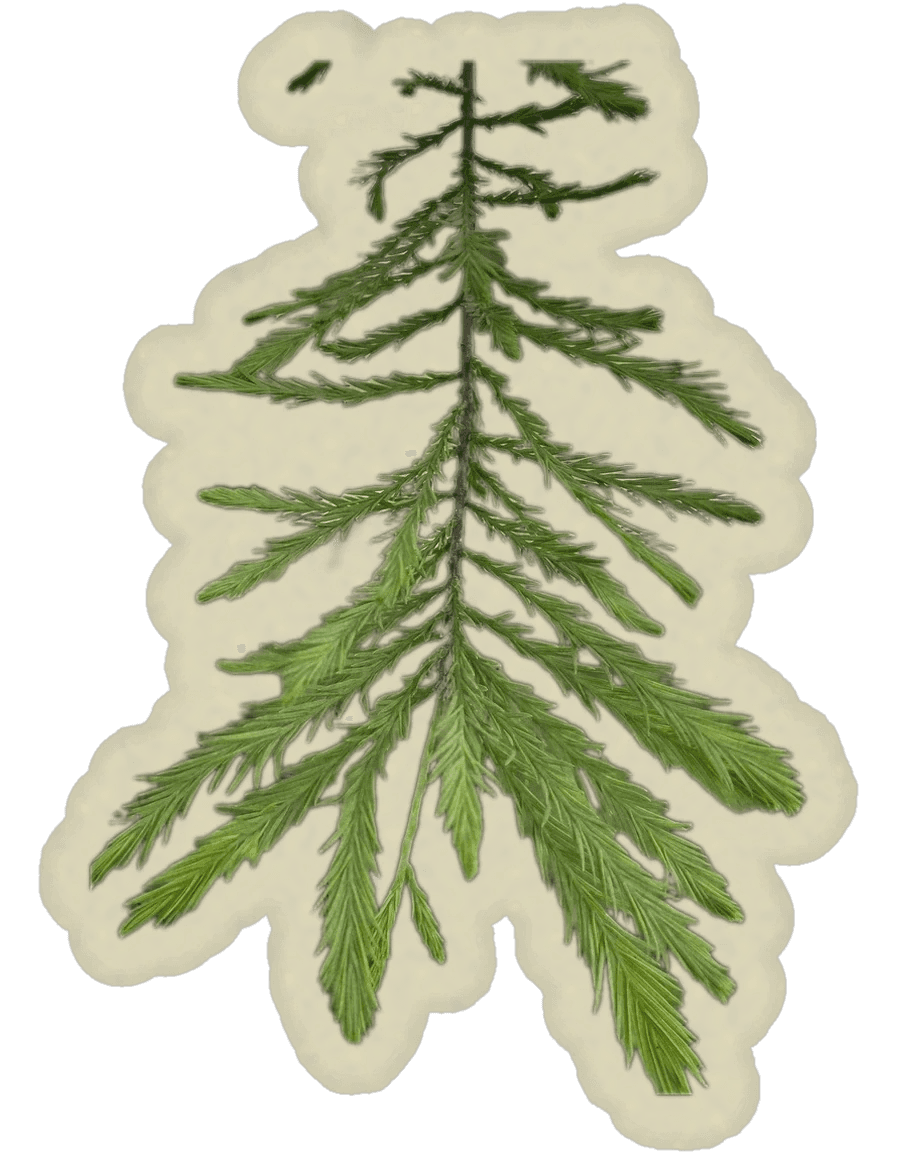
Taxodium
Bald-Cypress
time
time
time
time
time
time
Time here does not pass, but ebbs and flows.
Time here does not pass, but ebbs and flows.
Time here does not pass, but ebbs and flows.
Our ancestors, or so I continue to imagine, learned most at thresholds where one state loosened its hold and another sprung into action. Unfolding in the motions of one force meeting another, like the sediment settles as the rivers’ water recedes. What remains is never still, yet it is often held differently.
A small bird may eat the seed of a fruit, taking the young tree to a world far away. So we see, a generation is not marked by hours or dates, but by patterns that emerge in the relations we hold.
Time makes itself visible here through gathering and receding traces instead of a calendar advancing toward December.
Our ancestors, or so I continue to imagine, learned most at thresholds where one state loosened its hold and another sprung into action. Unfolding in the motions of one force meeting another, like the sediment settles as the rivers’ water recedes. What remains is never still, yet it is often held differently.
A small bird may eat the seed of a fruit, taking the young tree to a world far away. So we see, a generation is not marked by hours or dates, but by patterns that emerge in the relations we hold.
Time makes itself visible here through gathering and receding traces instead of a calendar advancing toward December.
Our ancestors, or so I continue to imagine, learned most at thresholds where one state loosened its hold and another sprung into action. Unfolding in the motions of one force meeting another, like the sediment settles as the rivers’ water recedes. What remains is never still, yet it is often held differently.
A small bird may eat the seed of a fruit, taking the young tree to a world far away. So we see, a generation is not marked by hours or dates, but by patterns that emerge in the relations we hold.
Time makes itself visible here through gathering and receding traces instead of a calendar advancing toward December.
CHAPTER VII
senses
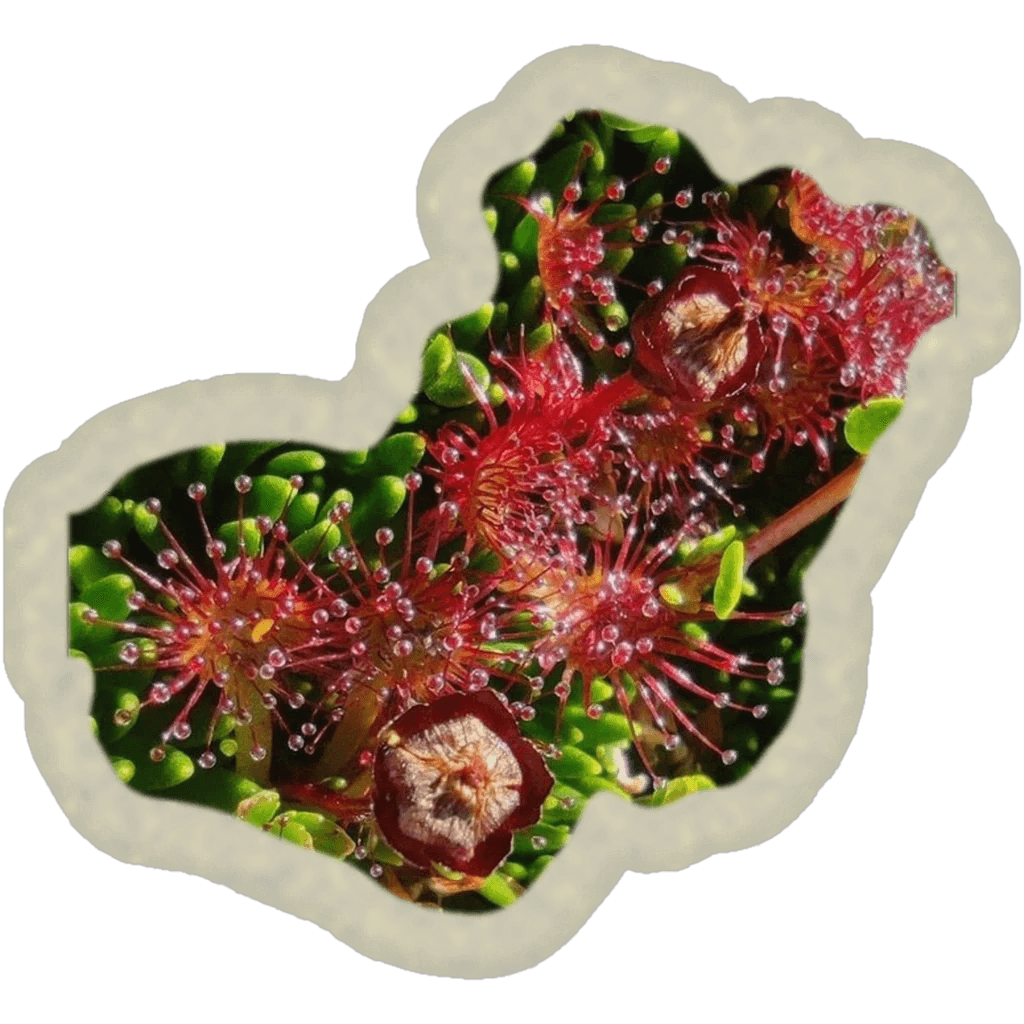
Drosera
Sundew
senses
senses
senses
senses
senses
senses
The pause is not empty, if you should feel it.
The pause is not empty, if you should feel it.
The pause is not empty, if you should feel it.
A pause means recognition, of your place within the world’s in-betweenness. As a part of the world, the pause invites you to imagine the whole.
And so it is treated with the weight of a ritual. Yet weight burdens, if not treated lightly. Let the ritual become a game between those who sit in the pause.
What do other humans notice in the places they travel? How do they ask plants questions to unfold time’s seasoned lessons?
Some may carry recognition from place to place, listening for how repetition endures even under the watch of different skies. Others stay long enough for the ground itself to answer.
In this play, we revel in gathering not answers, but ways of relating to many ecosystems. From many ways of seeing, our homes begin to form an image of a planet we can attempt to know.
Take comfort in knowing the simplest of things—a mere pause in between—can begin to paint a picture of the wholeness of a world you are already standing within.
A pause means recognition, of your place within the world’s in-betweenness. As a part of the world, the pause invites you to imagine the whole.
And so it is treated with the weight of a ritual. Yet weight burdens, if not treated lightly. Let the ritual become a game between those who sit in the pause.
What do other humans notice in the places they travel? How do they ask plants questions to unfold time’s seasoned lessons?
Some may carry recognition from place to place, listening for how repetition endures even under the watch of different skies. Others stay long enough for the ground itself to answer.
In this play, we revel in gathering not answers, but ways of relating to many ecosystems. From many ways of seeing, our homes begin to form an image of a planet we can attempt to know.
Take comfort in knowing the simplest of things—a mere pause in between—can begin to paint a picture of the wholeness of a world you are already standing within.
A pause means recognition, of your place within the world’s in-betweenness. As a part of the world, the pause invites you to imagine the whole.
And so it is treated with the weight of a ritual. Yet weight burdens, if not treated lightly. Let the ritual become a game between those who sit in the pause.
What do other humans notice in the places they travel? How do they ask plants questions to unfold time’s seasoned lessons?
Some may carry recognition from place to place, listening for how repetition endures even under the watch of different skies. Others stay long enough for the ground itself to answer.
In this play, we revel in gathering not answers, but ways of relating to many ecosystems. From many ways of seeing, our homes begin to form an image of a planet we can attempt to know.
Take comfort in knowing the simplest of things—a mere pause in between—can begin to paint a picture of the wholeness of a world you are already standing within.
CHAPTER VIII
invitation

Eschscholzia
invitation
invitation
invitation
invitation
invitation
invitation
In a world that can be known through the spaces in between, what might change if you learn how to listen?
In a world that can be known through the spaces in between, what might change if you learn how to listen?
In a world that can be known through the spaces in between, what might change if you learn how to listen?
Some call this book by its ancient title, “The Book of Pause.” Whatever name you may give to the Living Record, let yourself sit within yours.
Gather time. Enter the ritual, and play amidst the choir of your Bioregion, capacious in its relations.
Some call this book by its ancient title, “The Book of Pause.” Whatever name you may give to the Living Record, let yourself sit within yours.
Gather time. Enter the ritual, and play amidst the choir of your Bioregion, capacious in its relations.
Some call this book by its ancient title, “The Book of Pause.” Whatever name you may give to the Living Record, let yourself sit within yours.
Gather time. Enter the ritual, and play amidst the choir of your Bioregion, capacious in its relations.
EXPLICIT
end of the record
Here ends the Living Record, which some call The Book of Pause.
Here ends the Living Record, which some call The Book of Pause.
Here ends the Living Record, which some call The Book of Pause.
Bioregion Studios · section I · added to whenever a reader stops long enough to be answered